
For a long time, I treated AI as nothing more than a convenient shortcut. I opened it when I felt tired, stuck, or pressed for time. I used it to draft emails, summarize information, or generate quick ideas, then closed it and moved on. It was useful, but it never felt transformative. I was still working the same way, just slightly faster. That is why I decided to commit to a 30 day experiment. I used AI intentionally in my daily work, not to avoid thinking but to improve how I think. I paid close attention to what changed in my focus, my decision making, and the quality of what I produced. What surprised me most was not how much time I saved, but how deeply it reshaped the way I approached my work.
The first real improvement was clarity. Before using AI consistently, I often delayed tasks because my ideas were vague. I knew what I wanted to do, but not how to begin. During the experiment, I started explaining my thoughts to AI before starting any important task. I described my goal, my confusion, and what I thought the outcome should look like. In doing this, I realized that many of my problems were not related to effort or discipline, but to unclear thinking. When my input was messy, the response was messy. When I slowed down and clarified my intent, the output immediately improved. Over time, this habit changed how I worked even without AI. I became better at breaking down problems, identifying priorities, and spotting unnecessary complexity. AI became a mirror that reflected the quality of my thinking back to me, and that alone raised the standard of my work.
Another major change was the removal of friction. So much of my energy used to disappear into small tasks that were not difficult but mentally draining. Writing first drafts, rephrasing sentences, adjusting tone for different audiences, or figuring out how to begin a document all added resistance. AI did not eliminate effort, but it eliminated hesitation. Drafts came together quickly, which allowed me to focus on refining ideas rather than struggling to express them. Editing felt lighter because I was no longer emotionally attached to the first version. I could test different approaches, simplify explanations, and improve clarity without starting from scratch. As a result, I spent more time thinking about impact and less time fighting the process. My work became more intentional, not more careless.
Perhaps the most unexpected outcome was how much more valuable I felt in my role. Many people fear that AI will make their work replaceable. My experience showed the opposite. The more I used AI, the clearer it became that value does not come from producing words or ideas alone. Value comes from judgment, context, and decision making. AI could generate options, but I had to choose the right one. It could offer structures, but I had to understand the audience. It could speed up output, but I was responsible for accuracy, nuance, and meaning. Instead of weakening my role, AI sharpened it. I communicated more clearly, delivered work with greater confidence, and focused on solving real problems rather than wrestling with uncertainty.
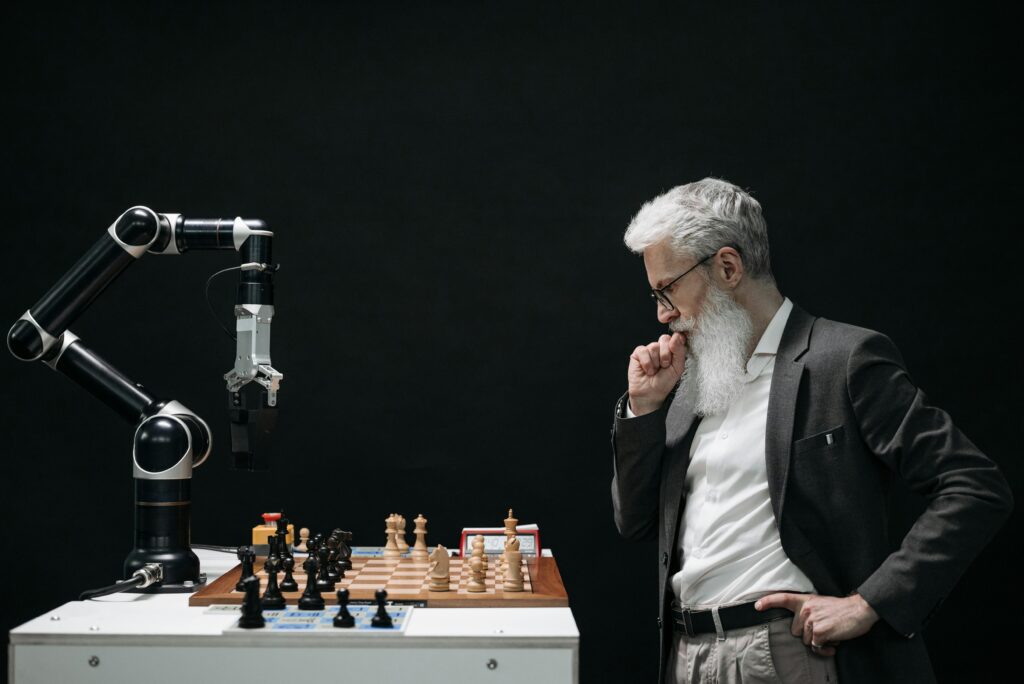
After 30 days, I stopped seeing AI as a tool for convenience and started seeing it as a thinking partner. It rewarded clarity, curiosity, and intention. It did not replace my effort, but it made that effort more effective. The real improvement was not doing more work in less time. It was doing better work with less wasted energy and more focus on what truly matters.